A Celebration of Somali Culture and Cuisine
Written by Kiyomi Kishaba
Wednesday, July 15, 2026
/0x3:2326x1487/prod01/channel_34/media/seattle-university/news-amp-stories/magazine/spring-summer-2026/Newsroom-Story_Ifrah_main.jpg)
In ‘Soomaaliya: A Cookbook’ alumna Ifrah F. Ahmed explores heritage, history and belonging through the flavors and traditions of her home country.
The aroma of cardamom, cloves and cinnamon fill Ifrah F. Ahmed's earliest memories of cooking.
“My mother taught me the ins and outs of Somali cooking. The first thing I learned was how to make shaah, our spiced black tea, pounding the spices in a mortar and pestle,” says Ahmed, '12.
Ahmed and her family left Mogadishu, Somalia, as refugees during the Somali Civil War when Ahmed was six years old. They settled in a growing Somali community in Seattle, where food connected Ahmed to her culture and became a way for her to connect to American culture as well.
“I really liked watching Food Network and Anthony Bourdain and experimenting with different foods I saw,” says Ahmed, who now calls New York City home. "I’d be into one specific thing, like American pancakes, and my mom would take me to different restaurants to try whatever I was into that month.”
When Ahmed began looking at colleges, Seattle University in the bustling Capitol Hill neighborhood stood out. She liked the focus on social justice, small class sizes and the inclusivity of Jesuit education. And the dining hall options were actually pretty good, too.
With her interest in history, politics and social justice, Ahmed studied political science and pre-law.
Angelique Davis, JD, professor of political science and African and African American Studies, and Rose Ernst, PhD, former associate professor of political science, were instrumental in cultivating Ahmed’s understanding of political science that prepared her for what she thought was her next step—law school, with the goal of becoming an international human rights lawyer.
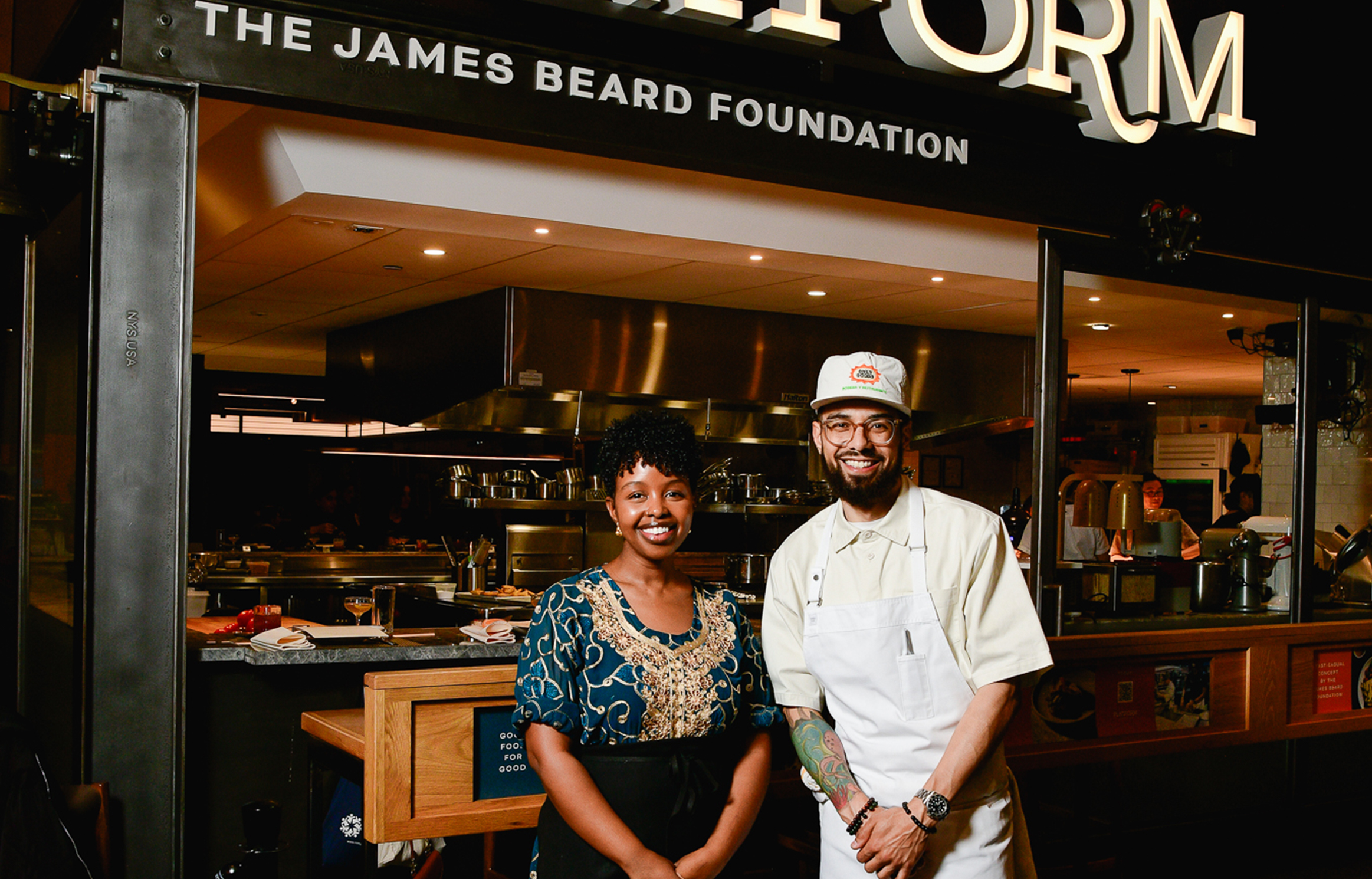
After a move to New York for law school, Ahmed debated staying in the legal world or following her passion for food. The answer became clear during a life-changing trip to Somalia in 2018.
“It was my first trip to Somalia since my family left when I was a child,” Ahmed says. “That was the catalyst for me switching careers. When I came back, I was so moved by the experience I started a Somali culinary pop-up called Milk & Myrrh.”
Ahmed realized that Somali cuisine was underrepresented and the Milk & Myrrh pop-ups sparked curiosity about Somali culture and food. She served multi-course fine dining-style Somali meals that were reimagined according to seasonal ingredients and migration.
Later she expanded to a more casual format of Somali-style canjeero breakfast burritos—that sold out instantly—at pop-ups in Los Angeles and Seattle. She also began contributing articles about Somali cuisine and recipes to different publications such as the Los Angeles Times and the Washington Post, along with being a regular contributor to the New York Times.
With a clear public appetite for her Somali food Ahmed decided to share the recipes—and some of her culture—with others through her own cookbook. But it’s not just any cookbook.
“I decided it was time to finally write a cookbook because I wanted to preserve our oral cooking traditions in writing for the next generation of Somalis and onward. It would have recipes, but it wouldn’t be a traditional cookbook. It would be so much more than that,” Ahmed says. “That’s my political science degree really coming through.”
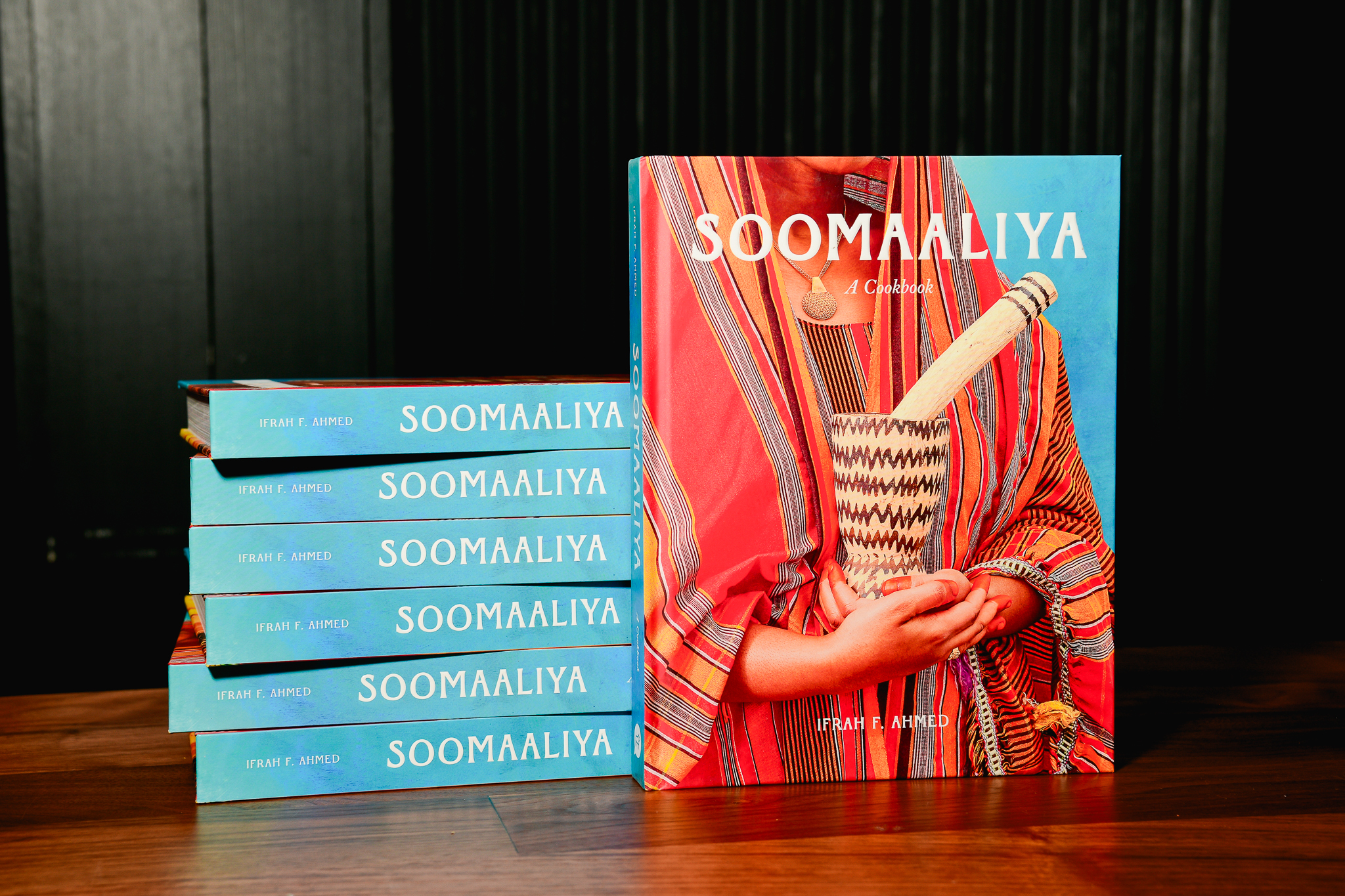
Ahmed’s debut cookbook, Soomaliya: Food, Memory, and Migration, published in March, features 75 Somali recipes along with the history of trade, colonization, resistance, migration and war in Somalia that influenced Somali cuisine.
“Somali cuisine is super unique because of where Somalia is located geographically. We have trading relationships dating back centuries, with the ancient Greeks and Romans and even China in the Middle Ages,” Ahmed says. “It has the longest coastline in mainland Africa. We have a rich Indigenous traditional cuisine and commonalities with other Swahili coast countries, as well as countries along the Indian Ocean trade routes. And of course there was the colonizing influence of Italy.”
Ahmed’s book is one of three Somali cookbooks in existence, following A Cookery of Somali Style published in 1978 and Somali Cuisine in 2007. Ahmed consulted with Somali Cuisine author Barlin Ali and Xawaash restaurant owners, Abdullahi Kassim and Laila Adde, as part of her research. Many Somali recipes are passed down in the oral tradition, so Ahmed found recordings in archives and learned from elders through phone calls or by cooking with them in-person.
For an introduction to Somali cooking, Ahmed recommends starting with shaah, spiced black tea or malawax, the cardamom crepe.
“Shaah is the first thing you’ll be served in a Somali household. It’s representative of Somali hospitality culture,” Ahmed says. “The cardamom crepe is mostly ingredients you have at home anyways and it’s a delicious dish.”
Along with recipes, Soomaaliya captures the history of Somali cuisine through photography.
“I couldn’t have a book be called Soomaaliya and not show what it’s like on the ground, to show my experience of Somalia, the beauty of the country and the resilience and strength of the people,” Ahmed says.
Some of the images include ancient Somali artifacts that were originally looted from the country but are now back in Somali hands, such as intricately carved daggers, spoons and flour-sifting baskets.
“I think it’s really reflective of the history presented in the book and shows history as an evolving, living thing, particularly for Somali culture,” Ahmed says.
For the cover, Ahmed didn’t want a traditional cookbook snapshot of food. Instead, the cover is a vibrant shot of Ahmed wearing Indigenous Somali fabric called alindi and she holds a traditional mortar and pestle.
“I wanted any Somali person to walk into a bookstore, see the cover and immediately understand that it was for them, showing cultural pride and colonial resistance,” Ahmed says. “This book is coming out in a time where the Somali community has been targeted in the news and I would encourage people to pick up this book to learn about the incredible Somali history and culture and meaningfully engage with an open heart.”
Similar News & Stories
-
/98x0:1100x633/prod01/channel_34/media/seattle-university/news-amp-stories/images/Student-Story-photo-Gracson-Milton.jpg)
Leaving Her Mark
SU NewsGracson Milton's commitment to leadership, service and community earned her one of Seattle University's highest student honors. -
/0x11:2326x1480/prod01/channel_34/media/seattle-university/news-amp-stories/magazine/spring-summer-2026/JonBaker_newsroomstory.jpg)
A Pioneering Powerhouse
Seattle University MagazineAs Seattle University celebrates 50 years of Diagnostic Ultrasound, the story of Joan Baker reveals how one unexpected career turn helped create what is now a vital tool in modern health care. -
/0x11:2326x1480/prod01/channel_34/media/seattle-university/news-amp-stories/magazine/spring-summer-2026/Kate_Elias_Newsroom-Story.jpg)
Championing Student Success
Seattle University MagazineFrom academic advisor to vice provost, Kate Elias is dedicated to helping students successfully navigate college life.