/165x0:2236x1350/prod01/channel_34/media/seattle-university/ethics-and-tech-conference/2026/WinterCampus.jpg)
ETHICS AND TECH CONFERENCE 2026
Technology, Energy and Security: How innovation is reshaping power, infrastructure and global security.
Technology, Energy and Security
Join Seattle University’s Technology Ethics Initiative for the fourth annual Ethics & Tech Conference, focused this year on Technology, Energy and Security.
Taking place May 15, 2026 at Pigott Auditorium at Seattle University, this year’s conference will explore how emerging technologies are reshaping energy systems and security landscapes while raising important ethical and policy questions.
From innovations in energy infrastructure and cybersecurity to the role of artificial intelligence in critical systems, speakers will examine how technological change affects resilience, governance, equity and public trust.
Join us as we consider how responsible innovation can shape a more secure and sustainable future.
Keynote Speaker
/0x0:860x860/prod01/channel_34/media/seattle-university/ethics-and-tech-conference/2026/Checkerboard_Amandeep-Singh-Gill.png)
Mr. Amandeep Singh Gill
United Nations Under-Secretary-General and Special Envoy for Digital and EmergingTechnologies, India
Mr. Amandeep Singh Gill serves as the United Nations Under-Secretary-General and Special Envoy for Digital and Emerging Technologies, a mandate he assumed on 1 January 2025. He previously served as the Secretary-General’s Envoy on Technology (2022–2024).
In this capacity, Mr. Gill leads the Office for Digital and Emerging Technologies (ODET), guiding the implementation of the Global Digital Compact and advising UN leadership on the strategic implications of technology. He drives system-wide coordination and champions inclusive digital cooperation with Member States, industry, and civil society. He also served on the Secretary-General's High-level Advisory Body on AI and the Scientific Advisory Body.
A veteran diplomat and scholar, Mr. Gill holds a PhD from King’s College London. He previously served as India’s Ambassador and Permanent Representative to the Conference on Disarmament in Geneva (2016–2018) and as Executive Director of the Secretariat for the High-level Panel on Digital Cooperation (2018–2019). Fluent in English, French, Hindi, and Punjabi, he brings a deep multicultural perspective to digital governance.
In 2024, he was recognized as one of TIME magazine’s “100 Most Influential People in AI.”
SPEAKERS
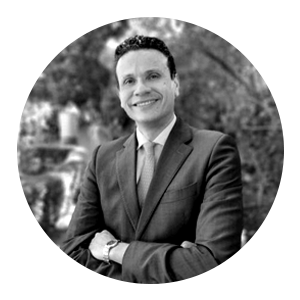
Lope Barrero
Lope Barrero is a Full Professor of Engineering at Pontificia Universidad Javeriana in Bogotá and currently a visiting scholar at Seattle University. Trained as an Industrial Engineer with an ScD in Environmental Health Sciences from Harvard University, his research focuses on human factors and ergonomics, examining how people interact with complex systems and how design affects safety, wellbeing and performance.
His recent work explores human factors, artificial intelligence and immersive technologies in high-stakes, time-constrained environments. He studies Human–AI interaction in settings such as cybersecurity operations centers and control rooms for essential industries, with particular attention to trust, workload and accountability.
He has served as Chair of Industrial Engineering and Dean of Engineering at Javeriana, leading digital transformation, curriculum innovation and gender equity initiatives in STEM.

Scott M. Giordano
Scott M. Giordano is an attorney with more than 25 years of experience in legal, technology and risk management consulting. An IAPP Fellow of Information Privacy and AI Governance Professional, Certified Information Systems Security Professional and Certified Cloud Security Professional, he co-founded The CISO Law Firm PLLC, which represents CISOs and cybersecurity leaders.
Previously, Scott served as General Counsel of Spirion LLC, where he led work on multinational data protection and its intersection with technology, export compliance and information governance. He also established global privacy programs for major organizations and held senior roles in legal technology firms.
He is co-inventor on a patent for intelligent searching of electronically stored information and taught the first law school course on electronic evidence and e-discovery. Scott is admitted to practice in Washington, California and the District of Columbia.

Ryan Molyneaux
Ryan Molyneaux is a Senior Technical Program Manager and Secure Future Initiative Lead at Microsoft, where she leads scalable and auditable programs that operationalize security and AI safety requirements.
She brings experience from high-stakes technology environments, including work supporting autonomous vehicle initiatives at Google and learning systems at ETS and Pearson. She partners across engineering, research, security and compliance teams to align technical execution with rigorous standards for security, privacy and governance, helping accelerate AI safety and remediation efforts across complex systems.

Julie Peacock
Julie Peacock is a strategic energy advisor specializing in the regulatory and technical frameworks needed to integrate large new electrical loads onto legacy grids. With more than 15 years of experience across the U.S. Department of Energy, Bonneville Power Administration and state regulation, she focuses on enabling large-load integration for data centers and electrified fleets in constrained markets.
Currently on loan from Pacific Northwest National Laboratory, Julie advises DOE and the Joint Office of Energy and Transportation on national initiatives to unlock grid capacity for high-growth infrastructure, helping bridge AI-driven energy demand with utility reliability.
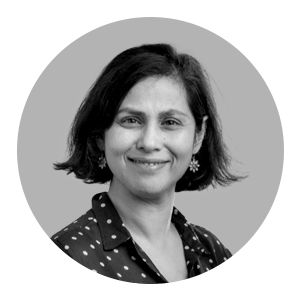
Saadia Pekkanen
Saadia Pekkanen is the Job and Gertrud Tamaki Endowed Professor of International Studies and Adjunct Professor of Political Science and Law at the University of Washington. She is founding director of the Program on Strategy, Policy and Diplomacy Research and the Space Law, Data and Policy Program. Her research focuses on outer space security, diplomacy and international affairs, with particular expertise on Japan and Asia.
She is co-editor of The Oxford Handbook of Space Security and a special issue on space diplomacy. She holds master’s degrees from Columbia University and Yale Law School and a doctorate in political science from Harvard University. She is an elected member of the International Institute of Space Law and a lifetime member of the Council of Foreign Relations.
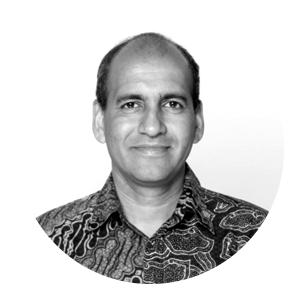
M.V. Ramana
M.V. Ramana is the Simons Chair in Disarmament, Global and Human Security and Professor at the School of Public Policy and Global Affairs at the University of British Columbia. He is the author of Nuclear is Not the Solution: The Folly of Atomic Power in the Age of Climate Change and other books on nuclear energy and policy.
He is a member of the International Panel on Fissile Materials, the International Nuclear Risk Assessment Group and the team behind the annual World Nuclear Industry Status Report. His honors include a Guggenheim Fellowship and the Leo Szilard Award from the American Physical Society.
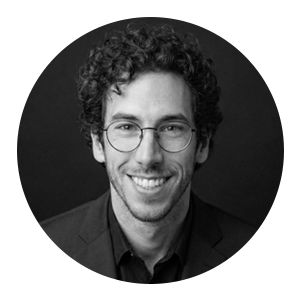
Grayson Shor
Grayson Shor is a battery and critical minerals circularity expert with more than a decade of experience scaling sustainability programs across five continents. He is Co-Founder and Chief Product Officer of Buckstop, an AI-driven critical minerals urban mining company, and Founder and Executive Director of the Pacific Northwest Battery Collaborative.
Previously, Grayson led Amazon Worldwide Operations’ battery sustainability and circular economy program, serving more than 1.2 million employees across 20 countries. His background spans roles as a U.S. diplomat, environmental intelligence briefer, humanitarian aid worker and entrepreneur. He has contributed to more than 200 U.S. government sustainability policy documents and lectures on climate security at Georgetown University.

Dr. Hansi Singh
Dr. Hansi Singh is Co-Founder and CEO of Planette AI, a venture-backed environmental forecasting startup based in San Francisco. She holds a PhD in atmospheric sciences and an MS in applied mathematics from the University of Washington and is a recipient of the U.S. Department of Energy’s Computational Sciences Graduate Fellowship and the Linus Pauling Distinguished Postdoctoral Fellowship.
Before founding Planette, she served on the faculty at the University of Victoria’s School of Earth and Ocean Sciences, where her research focused on coupled climate dynamics and polar sensitivity.

Swati Srivastava
Swati Srivastava is Associate Professor of Political Science and University Faculty Scholar at Purdue University, Faculty Associate at the Berkman Klein Center for Internet and Society at Harvard University and Non-Resident Scholar on Digital Futures at New America.
Her research examines the global power of Big Tech and responsibility attribution in AI governance. She is the author of the award-winning book Hybrid Sovereignty in World Politics and founding director of Purdue’s International Politics and Responsible Tech lab.
MODERATORS

Henry Louie
Henry Louie holds a BSEE from Kettering University, an MS from the University of Illinois at Urbana-Champaign, and a PhD from the University of Washington. His research focuses on off-grid electrical systems in developing countries. Dr. Louie is director of the Humanitarian Engineering Applications Lab at Seattle University, where he and his students develop practical solutions to end energy poverty. In 2015, he co-founded the non-profit organization KiloWatts for Humanity, which seeks to empower off-grid communities in Zambia and elsewhere. Dr. Louie is an award-winning educator, an IEEE Distinguished Lecturer, and a past Fulbright Scholar. See Dr. Louie's Website.

Erik Moore
Erik Moore's career blends institutional leadership with cybersecurity/IT operations leadership in industry, government, and academia. Moore is the Program Director of the Online MS in Cybersecurity Leadership at Seattle University, engaging with partners, mentors, and industry to provide students with the opportunity to accelerate and focus their careers. In cyber operations, Moore provided executive director-level leadership in government, transforming cybersecurity, regional IT infrastructure, education technologies, and fleet services. Moore also trained National Guard cyber units in multiple states (including red-teaming and scenario design) and designs virtual world avatar-based scenarios.

Enyu Zhang
As an associate professor in international studies at Seattle University, Dr. Zhang specializes in international relations, foreign policy analysis, and comparative politics with a geographical focus on East Asia. Her research has been published in reputable academic journals and publishers from Canada, China, South Korea, the United States, and the United Kingdom, including Canadian Journal of Political Science, Chinese Political Science Review, Foreign Policy Analysis, Journal of Chinese Political Science, Journal of Territorial and Maritime Studies, Ashgate, Blackwell, Lexington Books, Routledge, etc.
Photo Gallery
Photos from the Ethics and Tech Conference
-
/0x58:4800x3142/prod01/channel_34/media/seattle-university/ethics-and-tech-conference/2026/Ethics_and_Tech.Conference_'25_KP-201.jpg)
2025 Ethics and Tech Conference
Guest speakers at the conference.
-
/0x29:2400x1571/prod01/channel_34/media/seattle-university/ethics-and-tech-conference/2026/Ethics_and_Tech.Conference_'25_KP-54.jpg)
2025 Ethics and Tech Conference
-
/0x15:1200x786/prod01/channel_34/media/seattle-university/ethics-and-tech-conference/2025/EthicsAndTechConference24_nk_022.jpg)
2024 Ethics and Tech Conference
-
/0x15:1200x786/prod01/channel_34/media/seattle-university/ethics-and-tech-conference/2025/EthicsAndTechConference24_nk_033.jpg)
2024 Ethics and Tech Conference
-
/0x29:2400x1571/prod01/channel_34/media/seattle-university/technology-ethics-initiative/conference/2023/EthicsAndTech_yk_037.jpg)
2023 Ethics and Tech Conference
Administration and speakers from the 2023 conference.
-
/0x29:2400x1571/prod01/channel_34/media/seattle-university/technology-ethics-initiative/conference/2023/EthicsAndTech_yk_061.jpg)
2023 Ethics and Tech Conference
Guest speakers presented to an audience about AI during the Ethics and Tech conference at Seattle University.
Contact
Onur Bakiner
Professor of political science and director of the Technology Ethics Initiative.