Engaging Seattle Conference
June 17, 2026 at Seattle University's Student Center
/64x0:1757x1080/prod01/channel_34/media/center-for-community-engagement/EC-Conference-Header-1.png)
Engaging Seattle 2026: Coming Together for a More Just City
On June 17, 2026, Seattle University's Sundborg Center for Community Engagement is hosting a no-cost day of learning, storytelling and reflection about what it means to work for a more just city of Seattle. Engaging Seattle is a unique, hyperlocal conference where attendees will offer and receive insights that can be applied to further their work as professionals, public servants, university faculty and staff, educators and community-engaged practitioners in the city of Seattle. Experience sessions that provide history and context relevant to the work happening in classrooms or the community, demonstrate models for centering community voice or building justice-centered coalitions or teaching practices, or lead attendees to reflect on the values and skills they bring to community engagement. As attendees exchange lessons and insights about histories and current social issues impacting our city, we will focus on positive solutions, highlighting how we can come together to create change and inspire others to come alongside this work.

Conference Highlights
-
/126x0:1005x565/prod01/channel_34/media/center-for-community-engagement/Compressed-ES-Keynote-Carousel-1130X565.png)
Engaging Seattle Keynote Speaker is Andrea Caupain. She is the Co-Architect and Managing Partner of the Black Future Co-op Fund. She is also the Co-Founder and Co-Executive Director of Ile Kimoyo.
-
/126x0:1005x565/prod01/channel_34/media/center-for-community-engagement/Compressed-ES-Welcome-Panel-Carousel-1130X565.png)
Welcome Panel moderated by Larcy Douglas. Panelists include Dr. Dorothy Cordova (SU '53), Vincent Lu'u (SU '25), and Lily Estrada (SU '26)
Pre-Conference Activities
We're thrilled to offer three pre-conference activities that will take place on or near Seattle University's First Hill campus on Tuesday, June 16.
Take a walk with Wing Luke Museum staff to hear the stories of home and to celebrate BIPOC (Black, Indigenous, and People of Color) communities that are currently and were historically marginalized in Seattle. After the walk, join us for a family-style lunch at Tai Tung Restaurant.
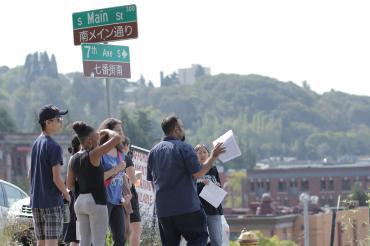
Wing Luke Redlining Tour
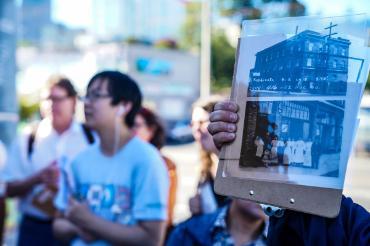
Wing Luke Walking Tour
Join HistoryLink historian and Executive Director Jennifer Ott on a one-mile walking tour across time to explore the piers and people, ships, railroads and ever-evolving landscape of the waterfront. This walking tour starts at Occidental Park, makes its way along the waterfront and finishes at Pier 62. After the walk, participants will have lunch at Pike Place Market.
-370x246.JPG)
HistoryLink Seattle Waterfront Walking Tour
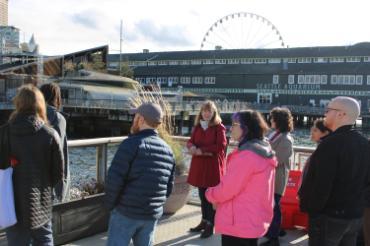
Jennifer Ott (center) explains elements of Seattle's waterfront history,
Liz Adams and Sparrow Etter Carlson, two of the individuals behind Sacred Streets, will lead us through their Companionship workshop. The Way of Companionship is a principled, practical response by any caring neighbor to the suffering of all our neighbors. The training introduces companionship as a relationship between equals, marked by mutuality rather than charity, and orients participants around five core practices: Hospitality, Neighboring, Side-by-Side, Listening and Accompaniment. Each practice is explored through story, reflection and real-world application - equipping you not with solutions, but with the reminder to come home to your most tender instincts to turn toward one another.
This experience will take place at Seattle University, followed by lunch at a nearby restaurant.
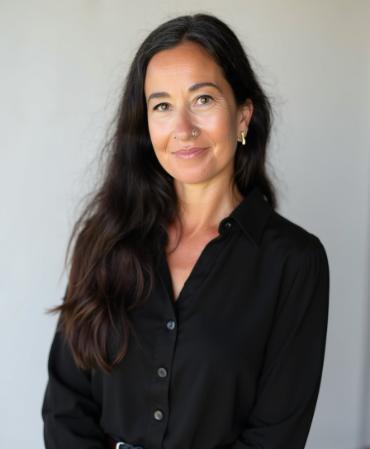
Sparrow Etter Carlson
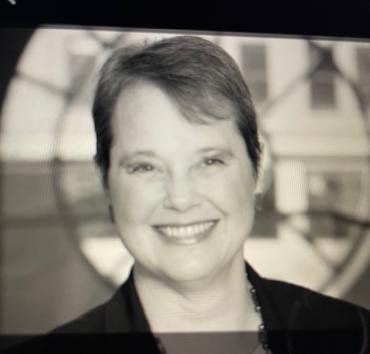
Liz Adams
Sessions At A Glance
| Seattle Stories | Coming Together | Looking Forward | |
|---|---|---|---|
|
Session 1: |
Partnership Insights: |
CID Family Associations (STCN 130) |
Breathing New Life into |
|
Session 2: |
Preparing Students for |
Creating Connections as a Large Organization (STCN 130) |
Our Communal Despair and the Seattle Homelessness Crisis: Remembering Our Belonging Is the Medicine We Need (STCN 210) |
|
Session 3: |
From Puzzles To Partnerships: Connecting Community Knowledge and Engaged Research (SINE 100) |
Breaking Silos to Keep Seattle's Chinatown International District a Thriving Community (STCN 130) |
Learning to Hope and Act Toward Policy Change from the "Conversation Already In Progress" (STCN 210) |
Conference Themes
- What can Seattle University faculty and staff and community-based practitioners learn from Seattle’s community leaders – past and present – that might inspire our collective action today?
- How can we acknowledge and address the violent histories that shape Seattle’s neighborhoods, including the realities of redlining, gentrification, and the displacement and genocide of Coast Salish peoples? What practices of reparation, repair, and healing can we uplift?
- Why is it important to promote and share Seattle histories and current issues? What are some projects, lessons plans, activities, etc. that support this learning?
- What are some models or promising practices for centering the voices and self-determination of those impacted by our programs and classrooms?
- What are some spaces, programs, course assignments, events, etc. that promote community connection, including connection across a variety of differences (age, class, race, neighborhoods, political interests)?
- What wicked problems do community organizations and university staff face in building broad coalitions to address urgent challenges such as race and economic justice, climate change and sustainability, or rapid technological change and its social impacts? What strategies or insights help engage people in addressing these challenges?
- What are some models or promising practices for engaging young people and emerging adults in local politics or civics education more broadly?
- How can we design volunteer or engagement experiences to promote long-term commitments to a more just Seattle, nation, or world?
- How do organizations create opportunities for collective envisioning for a better future?