CHAPEL OF ST. IGNATIUS
The Chapel of St. Ignatius is Seattle University's main chapel and primarily hosts our Roman Catholic liturgies.
/0x35:2400x1566/prod01/channel_34/media/seattle-university/web-redesign-26-50/FallMorning_cjt_Chapel.jpg)
Welcome to the Chapel of St. Ignatius. We invite you to explore the Chapel's offerings and join us in prayer throughout the academic year.
CHAPEL HOURS & MASS SCHEDULE
Regular Mass Schedule:
- Sundays: 11 a.m. and 5 p.m.
- Mondays-Fridays: 12:30 p.m.
Chapel Building Hours:
- Monday-Friday: 8 a.m. - 4:30 p.m.
- Saturday: Closed, except for scheduled events.
- Sundays: Open immediately before and after Sunday masses
View the Chapel of St. Ignatius Calendar for the most up-to-date mass schedule, special liturgies, and chapel closures.
UPCOMING SCHEDULE NOTES
- No weekday Mass at 12:30 p.m.
- Annual Martin Luther King Jr. Mass will be celebrated on Monday, January 19 at 11:00 a.m.; for more information, visit the Archdiocese of Seattle website. There will be no Monday Mass at 12:30 p.m.
- No Sunday Mass on February 15 in observance of the university’s Presidents Day weekend.
- Ash Wednesday (February 18) Masses will be celebrated at:
- 12:30 p.m.
- 5:00 p.m.
- 8:00 p.m.
- Novena of Grace with the Ignatian Spirituality Center will be celebrated daily from Thursday, March 5 through Friday, March 13:
- Weekdays: 12:30–1:30 p.m. PST
- Saturday & Sunday: 11:00 a.m.–12:00 p.m. PST
- Learn more at: https://www.ignatiancenter.org/novena2026
Thank you for being part of our worshiping community. We look forward to praying with you throughout the quarter.
Questions? Email aalfonso@seattleu.edu or call (206) 296-2215
A life full of service and justice
Click down below to learn more about St. Ignatius
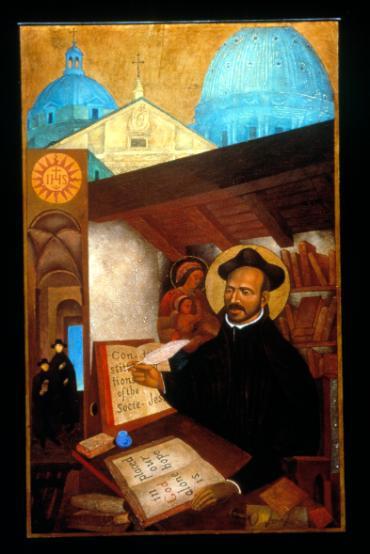
In 1491, Saint Ignatius of Loyola, the founder of the Society of Jesus (the Jesuit order), was born Inigo de Loyola to a wealthy Basque family near Azpeitia, Spain. In his youth he often attended the court of Ferdinand and Isabella and was known to engage in worldly indulgences and the darker intrigues common to young courtiers of his day. In 1517 Ignatius joined the army of the Duke of Najera where he was wounded in 1521 suffering severe leg wounds.
During a long period of recovery he endured great physical pain and forced to be bedridden. While adjusting to this new lifestyle, Ignatius read texts describing the life of Christ and the lives of the saints. He became fascinated with the pious deeds of the saints and realized it was a greater thing to compete with their acts of faith than to complete with soldiers in the manly arts of war. Later, at the altar of the Virgin Mary in a Benedictine monastery in Montserrat, Ignatius hung up his sword and rededicated his life to the service of God.
Ignatius experienced several visions and recorded what he learned in The Spiritual Exercises, a tract describing techniques of prayer and spiritual focus. He then traveled to Paris to study theology and the humanities from 1528 to 1535; Ignatius was ordained in 1537. In 1534, Ignatius and six other men founded the Society of Jesus, all taking vows of chastity, poverty, and loyalty to the Pope. In 1540 Pope Paul III approved the order with a membership limit of 60 men, and in 1544 this limit was lifted.
Ignatius led the order during its first sixteen years as the group grew to some 1000 members. During his life he served as a mentor to later influential Jesuits such as Saint Peter Faber and Saint Francis Xavier. He established the constitution for his order. This constitution established precedents in both the form and function of such constitutions for later orders. He charged the order to educate the young and ignorant of all classes, establish foreign missions, and to minister to the sick and imprisoned. Ignatius was beatified by Paul V on July 27, 1609. He was canonized on May 22, 1622 by Gregory XV. The Feast of Saint Ignatius of Loyola is on July 31.
Reflection and Discernment