/49x0:1151x703/prod01/channel_34/media/seattle-university/news-amp-stories/images/Blake-Island-wide-beach-view-cover.jpeg)
Students collect samples on Blakely Island beach.
Summer ecology courses immerse students in hands-on research on Blakely Island.
This summer, Katie Kaisaki’s homework was catching Dungeness crabs.
“I did research on different aspects of the environment such as prey, predators and hiding spaces, wanting to find the relationship between the number and sizes of Dungeness crabs I found on the north and south end of Blakely Island,” says Kaisaki, ’27. “The research was conducted over two days during low tide.”
The research Kaisaki was conducting is part of Seattle University’s summer ecology courses hosted at the Blakely Island Field Station in the San Juan Islands. For 12 days, the island becomes the classroom for eight to 14 undergraduate students.
The courses, from marine ecology to conservation biology, are a unique opportunity for undergraduates as most similar research field stations cater to graduate and post-doctorate level students. At Blakely Island, several courses are offered every summer through a partnership between Seattle Pacific University and SU that goes back four decades.
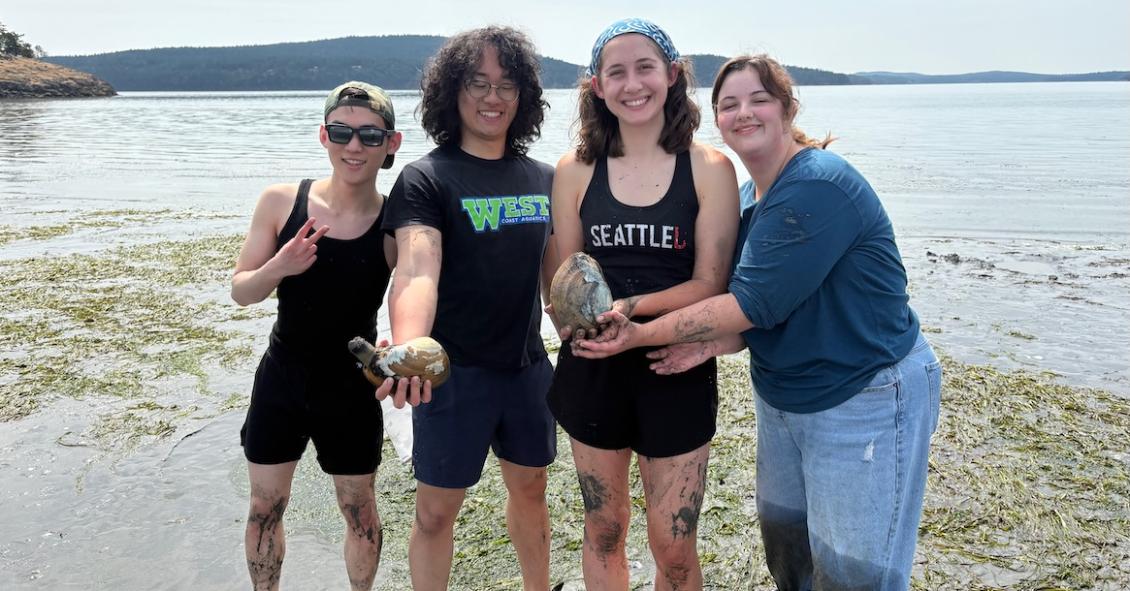
Kaisaki’s marine ecology course, taught by Professor W. Lindsay Whitlow, PhD, focused on the five types of marine habitats in the San Juan islands: Tide pools, boulder beaches, mudflats, seagrass beds and offshore sampling.
“We spend the first two-thirds of the class doing projects together to learn how to collect data and that also helps students discover what they want to do for their own project,” Dr. Whitlow says. “After a day to decompress, they have 48 hours to collect as much data as they can for their project.”
After collecting the data, the students have a couple days to analyze and write up their findings to present to their classmates and field station caretakers and staff. For Dr. Whitlow, the most important aspect of the student's research experience is learning how to adapt to unforeseen challenges along the way.
“The grade is not based on how well their project turns out. It’s based on how well they conduct their project and adapt to changing conditions,” Dr. Whitlow says. “It’s really about building those skills as a scientist that’s the emphasis.”
The course fits what would normally be a quarter-long class into 12 days, making the classwork intensive. However, it presents opportunities for students to gain class credits in a shortened timeframe along with the benefits of hands-on research.
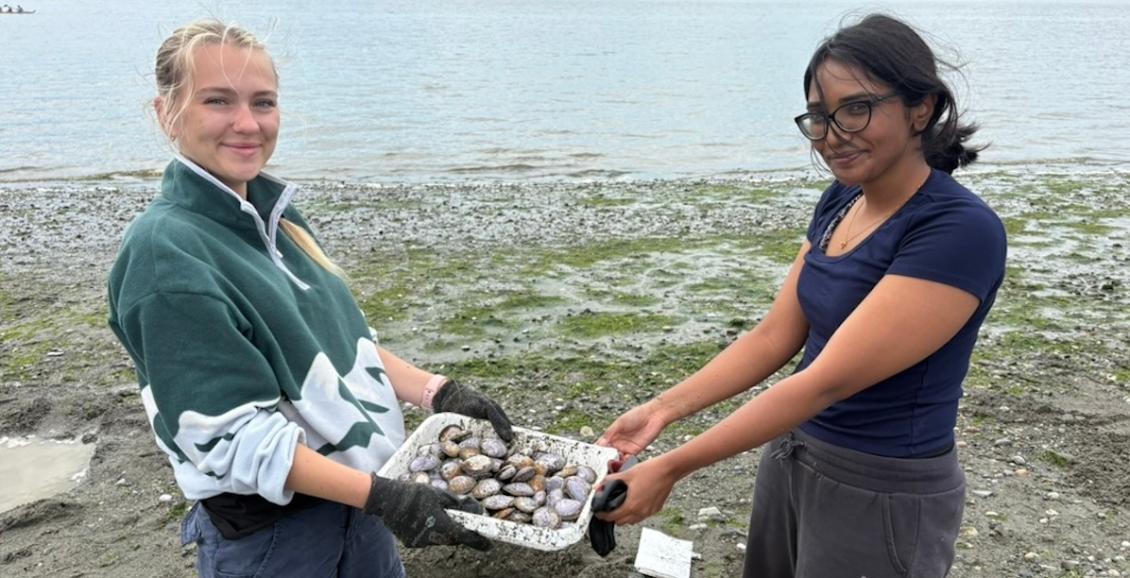
“The class was the perfect mix of fun and challenging,” Kaisaki says. “Almost every night we had to work on a research poster with a partner and everyone ended up working on them in the same room, which allowed us to ask each other questions.”
Kaisaki’s favorite part of the experience was being out by the water to collect plankton samples and depth measurements or digging in the sand for clam counts.
“I was able to experience what a day-in-the-life is like for a marine ecologist and it gave me an incredible sense of what that area of work would be like,” Kaisaki says. “With my major in chemistry, I feel like it’s broadened my horizon toward classes that could relate both chemistry and marine ecology together.”
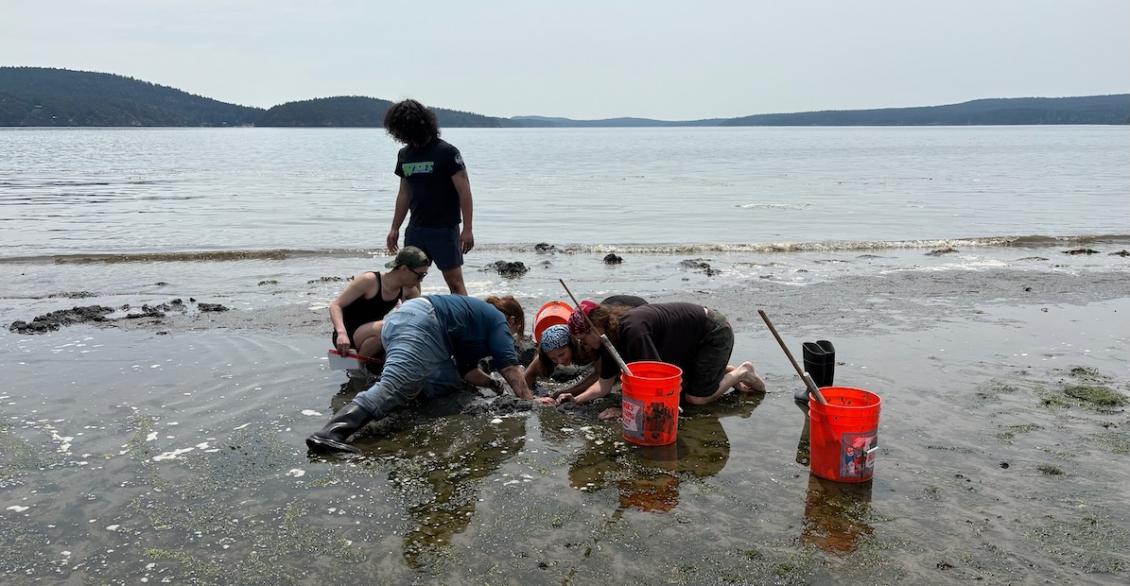
For many students across majors, the summer ecology course jumpstarts their interest in research. Dr. Whitlow’s student research group, the Seattle University Creative Collaboration On Terrestrial and Aquatic Scientific Hypotheses (SUCCOTASH), supports students’ continued research into varying kinds of ecology.
“In Seattle, the access to an array of different ecosystems is incredible. There’s the marine systems, forest ecosystems and even alpine,” Dr. Whitlow says. “Seattle sits in this glorious landscape, but it’s still a city. It provides an opportunity for interesting questions like ‘how well can we have functioning ecosystems alongside an urban community?’”
Learn more about these summer courses, which are open to undergraduate students of any major.
Similar News & Stories
-
/0x42:2400x1558/prod01/channel_34/media/seattle-university/news-amp-stories/images/Feast-Fest-outside-wide-shot.jpeg)
A Feast of Festival Fun
SU NewsCampus community turns out to celebrate St. Ignatius, the founder of the Jesuits. -
/0x64:1130x778/prod01/channel_34/media/seattle-university/news-amp-stories/images/Student-profile-Tang-photo.jpg)
Embodying Cura Personalis
SU NewsCollege of Nursing and Health Sciences scholar award-winner Nhu Tang a leader in her cohort. -
/95x0:1036x594/prod01/channel_34/media/seattle-university/news-amp-stories/images/Intern-Clark-pic-with-boss.jpeg)
Experience By Doing
SU NewsSeattle University students and recent graduates are gaining real-world experience, expanding their networks and discovering future career paths through internships.
Contact Listing
/0x36:1045x1242/prod01/channel_34/media/seattle-university/directory/faculty-amp-staff-directory/images/scieng/Whitlow,-W.-Lindsay.jpg)