Seattle University Hosts 59th Linus Pauling Medal Award and Symposium
Monday, December 8, 2025
/0x536:6421x4633/prod01/channel_34/media/seattle-university/college-of-science-and-engineering/news/images/LinusPauling_Award_FQ25_as_051.jpg)
Seattle University welcomed leading scientists and rising student researchers for a day of discovery, collaboration and celebration of breakthrough chemistry.
Seattle University’s College of Science and Engineering had the honor of hosting the 59th Linus Pauling Medal Award and Symposium in October, an annual celebration recognizing outstanding achievements in the field of chemistry. This year’s medalist, Professor Joseph S. Francisco, President’s Distinguished Professor of Chemistry at the University of Pennsylvania, was recognized for his many contributions to the study of atmospheric chemistry revolutionizing the understanding of chemical processes in the atmosphere. His work exemplifies the spirit of Linus Pauling, whose legacy of groundbreaking research and commitment to humanitarian issues aligns closely with Seattle University’s values of academic excellence and justice.
The event opened with a poster session featuring more than 30 research projects from students representing institutions across the Pacific Northwest. Seattle University Chemistry major Emily Kuramura, ‘26, was among the three poster awardees for her project, Development of Mass Channel-Based Principal Component Analysis, co-mentored by Professors Doug Latch from SU and Rob Synovec from University of Washington. The session highlighted the scope of undergraduate research in the region and offered students the opportunity to engage directly with leading scientists.
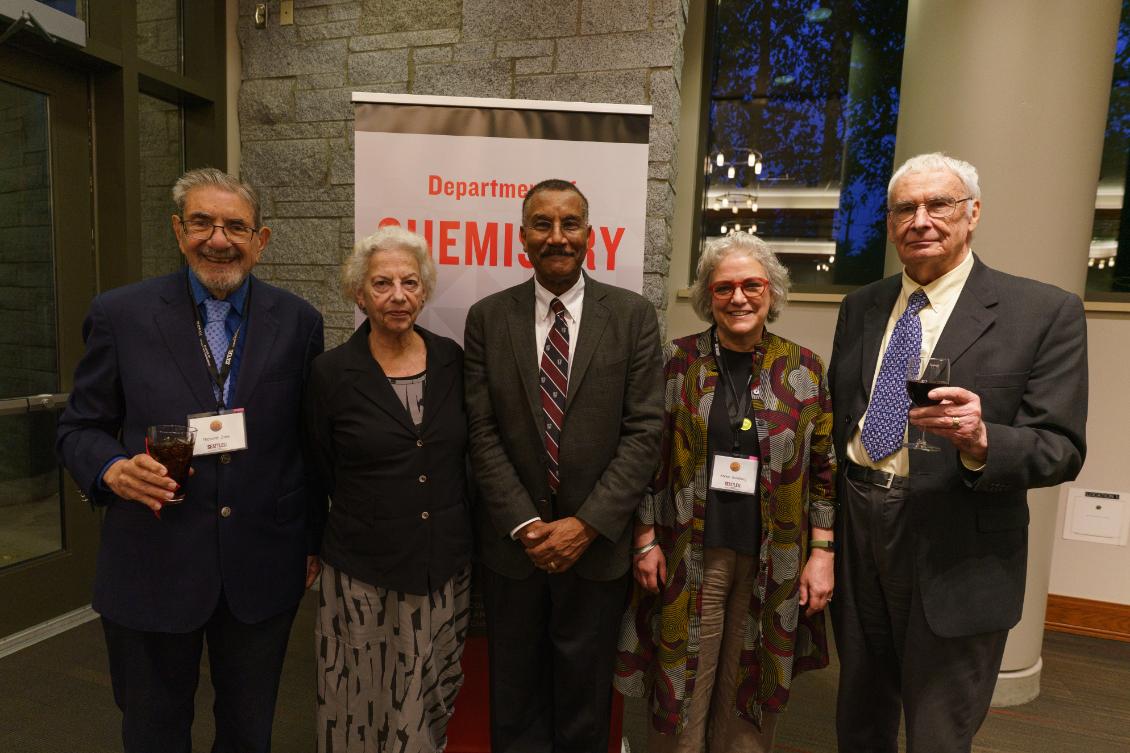
The afternoon symposium brought together an exceptional lineup of speakers, including former Pauling Medal recipients Professors Peter Stang (University of Utah) and Richard Zare (Stanford University), as well as distinguished chemists Professors Karen Goldberg (University of Pennsylvania) and Veronica Vaida (University of Colorado). The event culminated with an inspiring keynote by this year’s medalist, Professor Francisco, whose pioneering work on the chemistry of Earth’s atmosphere has reshaped understanding of atmospheric processes such as air-water and microdroplet chemistry.
For the Chemistry Department and the broader College of Science and Engineering community, hosting the Pauling Medal event was a meaningful opportunity to engage in dialogue about environmental chemistry and scientific discovery. The event fostered dialogue among students, faculty and renowned scientists, embodying the Jesuit values of informed engagement, critical thinking and concern for the common good.
The college extends its gratitude to the dedicated planning team from SU’s Chemistry Department and to the Puget Sound Section of the American Chemical Society for providing financial support.
Similar News & Stories
-
/0x11:2326x1480/prod01/channel_34/media/seattle-university/news-amp-stories/magazine/spring-summer-2026/JonBaker_newsroomstory.jpg)
A Pioneering Powerhouse
Seattle University MagazineAs Seattle University celebrates 50 years of Diagnostic Ultrasound, the story of Joan Baker reveals how one unexpected career turn helped create what is now a vital tool in modern health care. -
/0x42:2400x1558/prod01/channel_34/media/seattle-university/news-amp-stories/images/Nursing-Lab-photo.jpeg)
Expanding Advanced Nursing Education
SU NewsCollege of Nursing and Health Sciences launches Adult-Gerontology Clinical Nurse Specialist DNP with Virginia Mason Franciscan Health. -
/0x7:1742x1107/prod01/channel_34/media/seattle-university/news-amp-stories/images/Ethics-and-Tech-graphic.jpeg)
A Focus on Tech, Energy and Security
SU NewsIndustry leaders will take center stage at annual Ethics & Tech Conference.